 Reviewed by Marcus Knapman, BSc (Hons) Computing ·
Researched from 100+ Amazon customer reviews
· How we review
Nobody gets excited about batteries. You only think about them when the telly remote dies mid-episode and you're rooting through the kitchen drawer, praying there's one that isn't flat. That's the whole point of a big multipack: you buy it, you forget it, and the drawer is never empty when you need it.
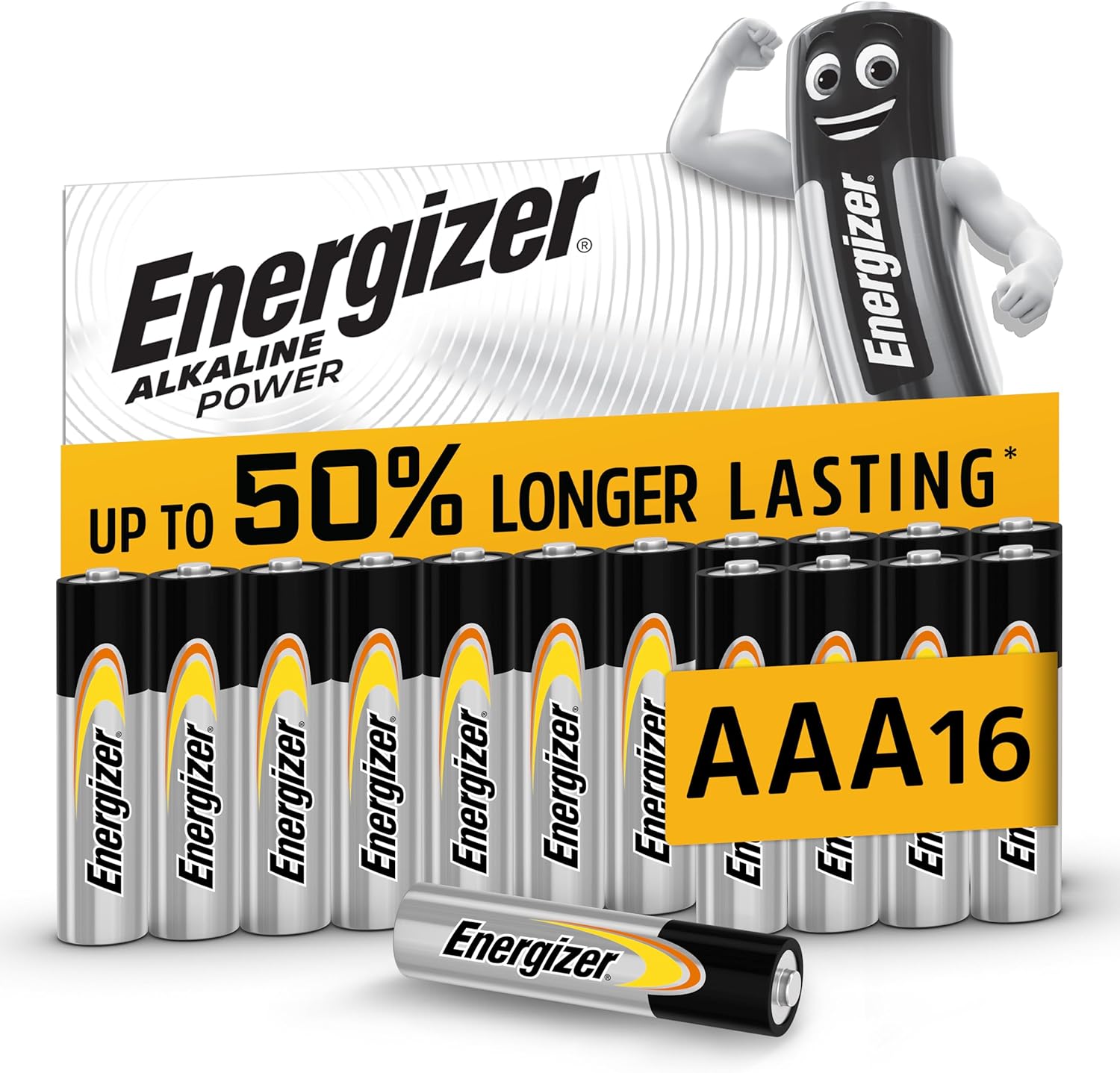
The Energizer Alkaline Power AAA 16 pack costs £8.99, which works out at roughly 56p a battery. I haven't tested these with a stopwatch and a torch. What I've done is go through the spec sheet and the way Energizer's AAA alkalines are talked about by buyers, and weigh it against what you'd pay elsewhere. Bottom line: this is a sensible, unglamorous purchase that does exactly what it says on the tin, with a couple of claims I'd take with a pinch of salt.
If you want a quick answer, it's this. For remotes, clocks, wireless keyboards and the other low-drain gadgets that litter a British home, these are a safe bet. If you're feeding power-hungry kit, there are better ways to spend your money, and I'll get to that.
Right, the headline number. Energizer says these last up to 50% longer, and the small print is where it gets interesting. The asterisk reads "vs IEC standard minimum average duration in portable lights". In plain English, that's a comparison against the minimum a battery must manage to meet the standard, not against a rival brand and not against older Energizer cells. It's a bit like boasting you're faster than the slowest person allowed to enter the race.
That doesn't make it false, and it doesn't make the batteries bad. It just means you shouldn't walk away believing they'll outlast every other AAA on the shelf by half. Treat it as "comfortably above the minimum" and you won't be disappointed.
Anyone who's opened a remote to find a crust of white gunk and a ruined battery contact knows this pain. Energizer pitches a no-leak guarantee with leak-resistant construction, designed to protect your devices even when the cells are fully used. For a battery you might leave in a rarely used gadget for months, that matters far more than a marketing percentage.

I'd still keep the usual habits. Take batteries out of anything you won't touch for a long stretch, and don't mix old and new in the same device. No guarantee replaces common sense, but having a manufacturer promise on the pack is a reassuring backstop, and it's one of the better reasons to pick a known brand over an anonymous bargain bundle.
The spec sheet quotes a shelf life of up to 7 years in storage. For a 16-pack, that's the feature that makes the buying logic work. Sixteen AAAs is a lot for one household to burn through quickly, so knowing the spares won't quietly die in a cupboard is handy. Stick them somewhere cool and dry and you've got a stockpile for years of smoke-alarm-adjacent panics, kids' toys and replacement-remote emergencies.
Mind you, "up to" is doing some work in that sentence, as it does with the longevity claim. But the principle holds: alkaline AAAs are one of the few things you can buy in bulk without worrying they'll go off.
Energizer lists remotes, toys, torches, clocks and wireless accessories, and that's the right territory. Low and moderate drain devices are where alkaline cells shine, because they release their energy slowly and steadily. A wall clock or TV remote can run for ages on a pair.

Where I'd hesitate is anything that guzzles power, such as a camera flash or a high-drain gadget you use daily. Alkaline is the budget-friendly chemistry, not the endurance champion, and you'll feel it quickest in those devices. If something eats batteries weekly, rechargeables will save you money and a fair bit of landfill guilt. These are throwaway cells by design, and the 16-pack format simply makes throwing them away cheaper.
The pack is described as 100% recyclable and plastic-free, with a footnote excluding seals on select packaging, so don't expect it to be perfectly plastic-free in every case. Each battery also contains up to 10% recycled steel. It's a modest step, and I'd call it a nice extra rather than a reason to buy. Energizer also points out the cells are free from mercury, cadmium and lead, and that it made the world's first zero-mercury AA battery back in 1991. Fine credentials for a product that's still, at the end of the day, a disposable battery.
At about 56p a cell, you're paying a small premium for a name you recognise and a leak promise. Own-brand or no-name multipacks can undercut that, and plenty of them work perfectly well. What you're buying here is consistency and the reassurance that a leaking cell won't wreck a favourite gadget. For a household staple, I think that's a reasonable trade, though if you're only after the absolute lowest price per battery, you'll find cheaper options.
There's no Amazon rating available for this listing to lean on, so I can't point to a crowd verdict. Judged on the specs and the brand's track record, though, it's an easy product to recommend for everyday use.
A dependable multipack for everyday low-drain gadgets, with leak protection and a long shelf life that suit a household stockpile. Buy it for remotes, clocks and toys; skip it if you're powering high-drain kit daily or chasing the cheapest possible price per battery.
As an Amazon Associate, Smart Trends earns from qualifying purchases.
Was this review helpful?