 Reviewed by Marcus Knapman, BSc (Hons) Computing ·
Researched from 100+ Amazon customer reviews
· How we review
Nobody gets excited about a coin battery. You buy them when something dies, you swear at the tiny compartment, and you forget about them until the next time. So why am I writing 1,000-odd words on a pack of CR2032s? Because there's one feature on these that actually matters, and it isn't on most of the cheaper packs sitting next to them on the shelf.
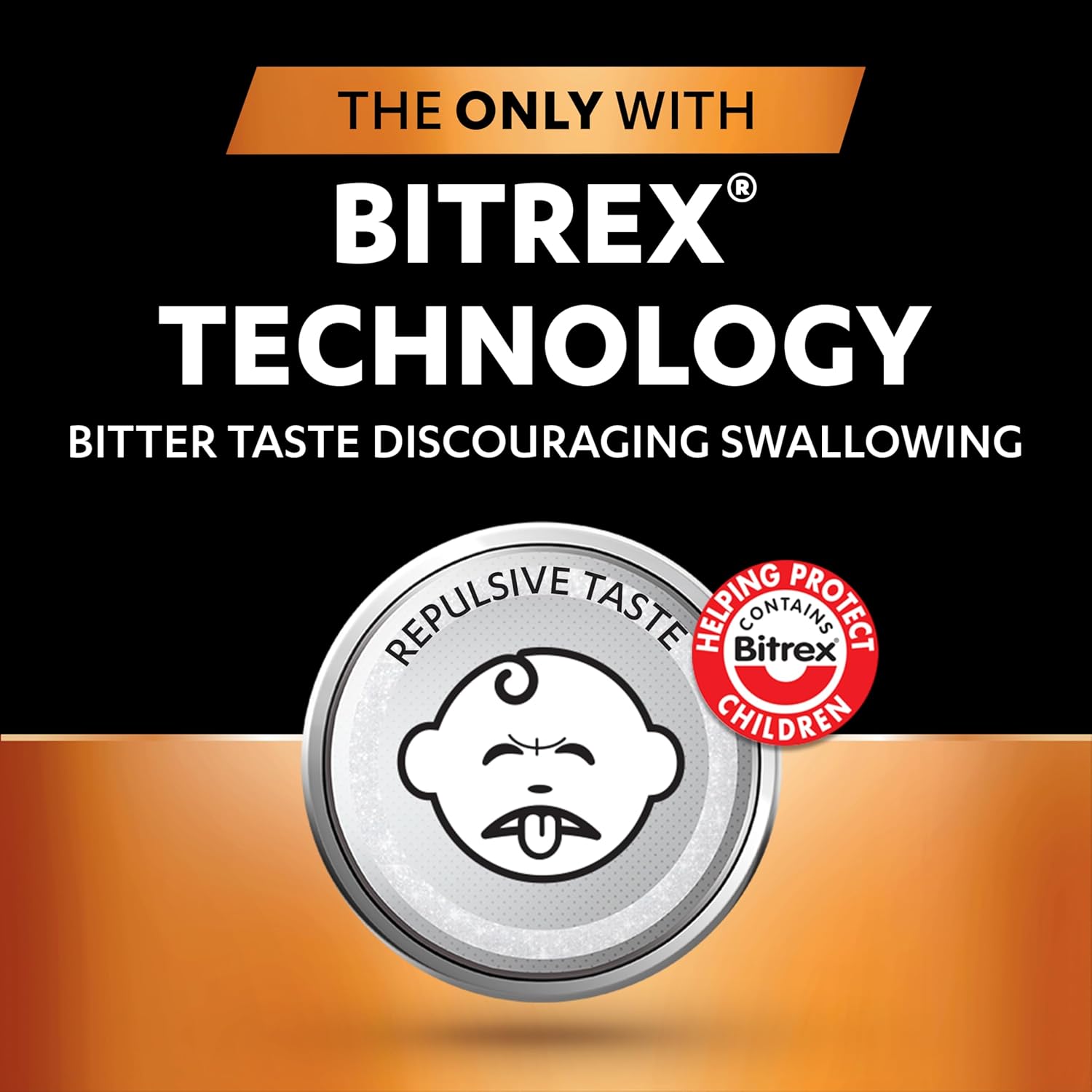
The Duracell 2032 Lithium Coin Batteries (8 Pack) are the ones Duracell recommends for Apple AirTags, and they cover the usual run of key fobs, home gadgets, fitness trackers and medical accessories. But the headline here is the bitter-tasting coating on every cell, designed to put babies and toddlers off swallowing them. Swallowed button cells are a serious hazard in any house with small children, so a battery built with that in mind is worth taking seriously.
At £7.99 for eight, you're paying around a pound a cell. That's not the cheapest CR2032 deal you'll find, and I'll be upfront about that. But if you've got kids, grandkids, or regular visitors with sticky-fingered toddlers, I think the extra safety engineering is worth a few quid. My bottom line: a sensible, slightly premium buy that I'd choose over the no-name multipacks for any device within a child's reach.
Every cell in this pack has a ring-shaped layer of Bitrex applied to both sides. Bitrex is a non-toxic bittering agent, and the idea is simple: if a toddler pops one in their mouth, the taste is vile enough to make them spit it out. Duracell says it developed this in partnership with the European Association of Paediatrics, and bills it as its most secure battery yet. Worth noting the claim is specific to the 2032, 2025 and 2016 sizes, so don't assume it carries across the whole Duracell coin range.
Is it a guarantee? No, and Duracell doesn't pretend it is. Nothing replaces keeping batteries and battery-powered devices out of reach. But it's a genuine extra layer of protection, and in my view it's the single best reason to pick these over a cheaper pack.
The other safety measure is the double blister packaging, which is deliberately difficult to open without scissors. I'll say it plainly: this is mildly irritating. You'll want a pair of scissors to hand, and if you're opening a pack in a hurry because your car key fob has just died in a car park, you'll feel the friction.

But that's exactly the point. If a child can't get into the packaging easily, they can't get at the batteries. I'd call this an annoyance I'm happy to live with, and probably the closest thing to a real negative here for everyday use. Once you've opened it, I'd suggest keeping the spares somewhere high up and out of sight rather than loose in a drawer.
Duracell specifically recommends this battery for Apple AirTags, and plenty of buyers will be here for that reason alone. An AirTag uses a single CR2032, so an eight-pack goes a very long way. If you've got a handful of tags on keys, bags and luggage, you've effectively bought yourself years of replacements in one go.
Beyond AirTags, the same size turns up in key fobs, home devices, fitness accessories and medical gadgets such as some thermometers and blood glucose meters. The standard 3V CR2032 format means it should fit anything that asks for one, but always check your device's manual before assuming.
Duracell guarantees these will stay fresh in the packaging for up to 10 years. For a battery you buy in an eight-pack and use one at a time, that's a useful promise. You can stash spares in a drawer and trust they'll still work when you eventually need them, rather than finding a dead cell the day your fob gives up.
The 'up to 70% extra life' claim needs a pinch of salt. Reading the small print, it's measured against the minimum average duration in the IEC standard test for 2032 lithium coin cells, and Duracell itself says results vary by device and usage. In other words, it's compared against a minimum benchmark rather than against rival batteries, so I wouldn't expect 70% more runtime than the pack next to it. Treat it as 'meets or beats the standard comfortably' rather than a miracle. I couldn't find an Amazon star rating to lean on here, so I'm relying on the spec sheet and the manufacturer's testing claims rather than a crowd verdict, and I'd rather tell you that than dress it up.
For eight cells, £7.99 works out at roughly a pound each. You can certainly find cheaper CR2032 multipacks from unbranded sellers, and if you only care about the cost per battery in a device nobody under 12 will ever touch, those are fine. I wouldn't pay a premium for the brand name alone.
What you're paying for here is the bitter coating, the difficult-to-open packaging and a decade of guaranteed storage life. For a household with small children, that's a modest premium for a safety feature I'd happily pay for. For a single-person flat with a TV remote and nothing else, it's harder to justify.
Beyond the fiddly packaging, the other drawback is the lack of real-world data. With no Amazon rating available to me, I can't point to thousands of buyers confirming the longevity claims, and the extra-life figure is measured against a minimum standard rather than head-to-head with competitors. Duracell is a trusted name and lithium coin cells are a mature technology, so I'd be surprised if these disappointed anyone. But I'd rather flag the gap than pretend it isn't there.
The Duracell 2032 Lithium Coin Batteries are a sensible, slightly premium buy, and the bitter coating is the reason to choose them. If you've got young children around, or you're stocking up for AirTags and key fobs, I'd happily recommend them. If you're buying purely on price for devices kids will never touch, a cheaper multipack will do the job just as well.
As an Amazon Associate, Smart Trends earns from qualifying purchases.
Was this review helpful?