 Reviewed by Marcus Knapman, BSc (Hons) Computing ·
Researched from 100+ Amazon customer reviews
· How we review
Is there a laptop in the world that justifies £2,499? That's the question I kept turning over while picking through the spec sheet for the Apple MacBook Pro 14.2-inch with the M5 Pro chip. It's a lot of money. More than a decent used car engine, a good e-bike, or a fortnight in the Algarve with the kids. So it had better be something special.
Here's my bottom line up front: it is, but only for a specific sort of person. If you edit video, run local AI models, produce music, or generally spend your working day asking a computer to do things that make lesser machines sound like a hairdryer, this is a superb tool. If you mostly live in a browser and a few documents, you're buying a Formula 1 car to do the school run.
There's no Amazon star rating to lean on yet, so this review is built on the spec sheet, Apple's own claims (which I'll treat with a healthy pinch of salt), and what the wider track record of the MacBook Pro line tells us. Apple tends to be very good at the fundamentals: screen, speakers, battery, build. Where it gets cheeky is the pricing ladder, and that's where this configuration gets interesting.
The headline here is the 15-core CPU and 16-core GPU, with a Neural Accelerator built into each GPU core. In plain English, Apple has designed this chip to run AI workloads locally rather than shipping everything off to a server somewhere. Large language model inference, on-device training, that sort of thing. If you're a developer or a researcher who wants to run models on the machine in front of you, that's a genuine reason to pay the Pro premium.
For everyone else, Apple Intelligence handles the writing tools and the everyday assistant bits, with privacy protections Apple makes a big song and dance about. Whether you'll use any of it daily is another matter. I suspect plenty of buyers will try it for a week and then forget it exists.
This configuration pairs 24GB of unified memory with a 1TB SSD. Apple says the SSD is up to 2x faster than before and that the starting storage has doubled, which is welcome. A terabyte used to feel like an upsell. Now it's the floor.

The 24GB is the bit I'd think hardest about. It's plenty for most creative work and heavy multitasking. But unified memory is soldered in and can't be upgraded later, and if you're serious about running large AI models locally, you may find yourself wishing you'd stretched further. Equally, if you're only ever going to run Safari, Slack and a spreadsheet, you've already paid for more than you need. This is a machine where you need to be honest with yourself about your workload before clicking buy.
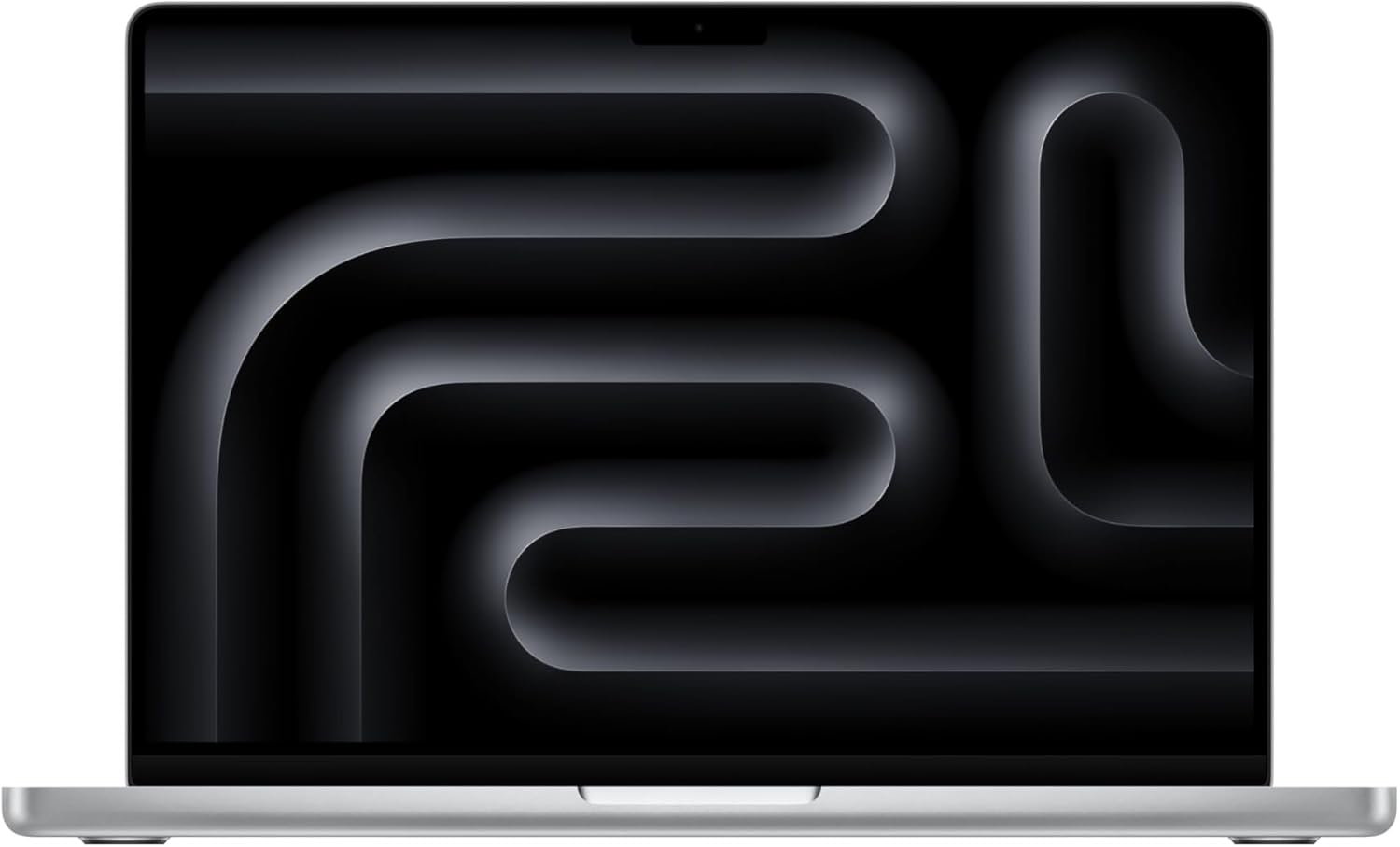
The 14.2-inch Liquid Retina XDR display is the part of this laptop I'd be most reluctant to give up. The numbers on the spec sheet are 1,600 nits peak brightness, 1,000 nits sustained, and a 1,000,000:1 contrast ratio. That sustained figure matters more than the peak. It means bright HDR content stays bright rather than dimming after a few seconds.
If you grade photos, cut video, or simply like your films to look like films, this panel is a big part of what you're paying for. Compared with the screens on most Windows laptops in this price bracket, it's the sort of thing you notice within thirty seconds and then can't un-notice.
Apple's claim is all-day battery life, and crucially, the same performance on battery as when plugged in. That second part is the one that matters. Plenty of powerful laptops quietly throttle themselves the moment you pull the charger out, leaving you with a very expensive machine behaving like a budget one on a train between Manchester and London. Apple says the MacBook Pro doesn't do that. I'd treat that as a strong selling point for anyone who works away from a desk, though I'd want to see long-term user reports to confirm how it holds up under sustained loads.

A 12MP Center Stage camera, three studio-quality microphones and six speakers with Spatial Audio and Dolby Atmos support. For a laptop, that's a ridiculous amount of audio and video hardware. It means video calls look and sound sharp, and you can watch a film without reaching for headphones or a Bluetooth speaker. It's a small thing that adds up over a working week, and it's one of the reasons Mac users tend to be so smug about their machines.
If you already carry an iPhone, the continuity features are properly useful. iPhone Mirroring lets you view and control your phone from the Mac. You can copy on one device and paste on the other, send texts from the Mac, and answer FaceTime calls on it. None of this is revolutionary, but it removes tiny bits of friction that otherwise add up. If you're an Android user, a good chunk of this appeal simply evaporates.
The price is the obvious one. At £2,499 this is firmly premium territory, and Apple's configuration ladder is designed to make you spend more than you intended. The non-upgradeable memory and storage means you have to guess your future needs on day one and pay for that guess. Then there's the lack of independent Amazon feedback on this specific model, which means early buyers are, to a degree, doing the testing for everyone else. That's par for the course with a new chip generation, but it's worth knowing.
Wi-Fi 7 is included, which is nice, but only useful if your router has caught up. Most UK homes are still firmly on Wi-Fi 5 or 6, so that's one for the future rather than the present.
If you work in video, audio, development or AI and want a laptop that stays fast away from a plug, the Apple MacBook Pro 14-inch with M5 Pro is one of the best tools you can buy. If your day is emails, browsing and documents, spend a third of this on something lighter and keep the rest for something more fun.
As an Amazon Associate, Smart Trends earns from qualifying purchases.
Was this review helpful?


