 Reviewed by Marcus Knapman, BSc (Hons) Computing ·
Researched from 100+ Amazon customer reviews
· How we review
Is there any laptop more sensible to recommend than a MacBook Air, and any laptop more annoying to price up once you tick the right boxes? That's the tension at the heart of this one. The Apple MacBook Air 15-inch with the M5 chip is, on paper, the laptop most people should buy if they're already comfortable with macOS. Light, quiet, long-lasting, with a screen big enough to actually spread out on.
But this particular configuration, with 24GB of unified memory and a 1TB SSD, costs £1,968.65. That's serious money. It's the sort of figure that makes you stare at the ceiling for a minute and wonder whether you really need that extra memory or whether you're just being talked into it by a drop-down menu.
I haven't had this machine on my desk. What I've done is go through the spec sheet in detail and read what buyers are saying about the Air line, and the picture is consistent: this is an exceptionally capable, quiet, well-made laptop with one big question mark, which is whether you need to spend this much. My bottom line is that the 15-inch Air is the right shape of laptop for a lot of people, but this top-end build is only the right answer for a narrower group than Apple would like you to think.
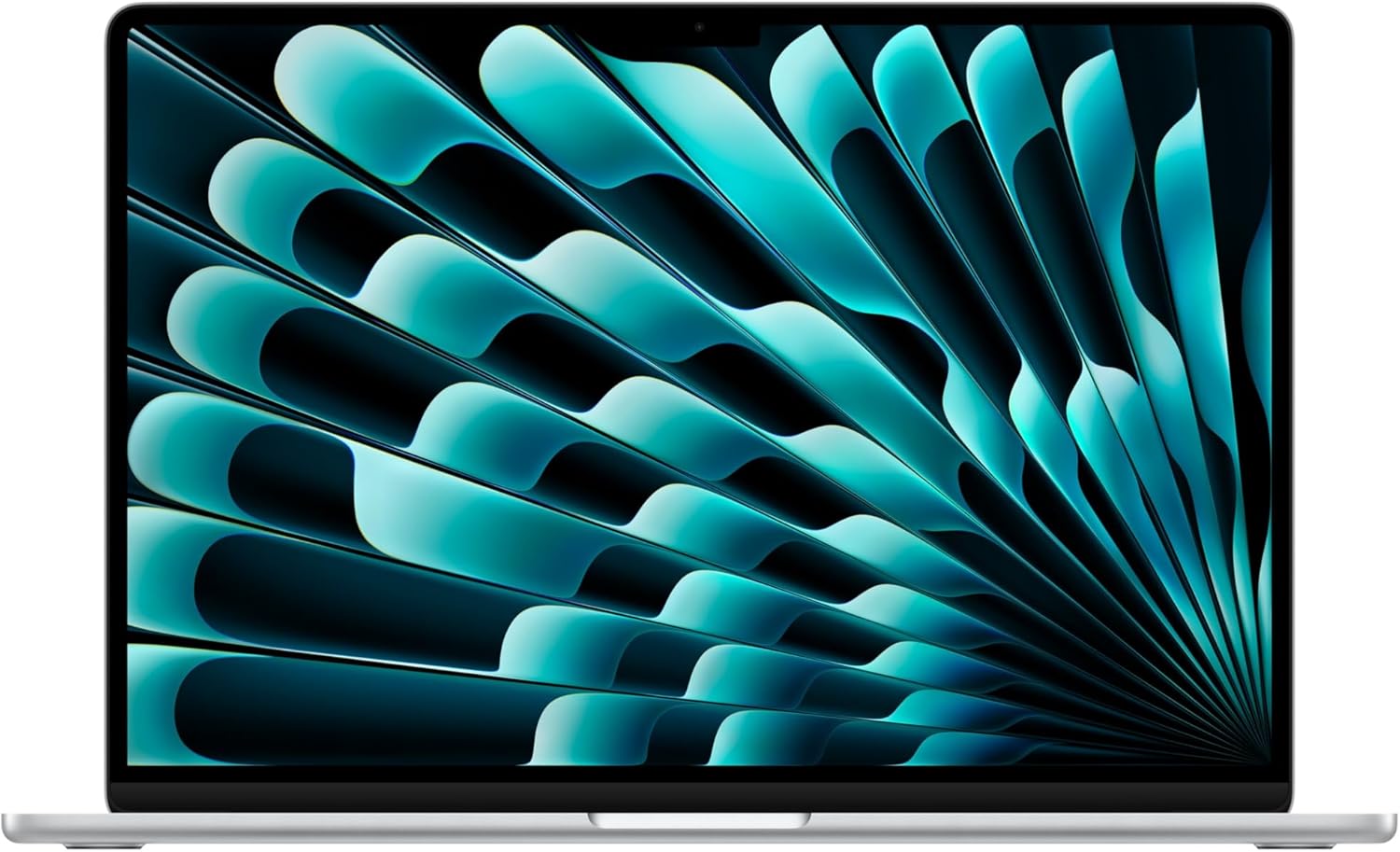
Most laptop conversations drift towards the extremes. Tiny ultraportables on one side, hulking workstations on the other. The 15.3-inch Air sits in an awkward but rather lovely middle ground. You get a Liquid Retina display that supports 1 billion colours, so photos and video look rich and text stays crisp, without the weight and bulk you'd expect from a screen this size.
Having that much panel is a quiet luxury. Two windows side by side stop feeling cramped. Spreadsheets become less of a squint. If you've ever spent a working day hunched over a 13-inch screen, you'll understand why people rave about stepping up a size.
The M5 brings a faster CPU, a next-generation GPU with Neural Accelerators, and a more powerful Neural Engine. In plain terms, Apple is positioning this as a machine built for on-device AI work as well as everyday tasks. For normal use, email, browsing, documents, video calls, streaming, you'll never trouble it. It's the heavy end where the extra memory comes in.

The 24GB of unified memory is what separates this build from the cheaper ones. Unified memory is shared between the CPU and GPU, which is why Apple machines tend to feel smoother than their raw numbers suggest. If you edit 4K video, work with large photo libraries, run virtual machines or juggle dozens of browser tabs alongside creative software, more memory gives you headroom that keeps things fluid for years. If you mostly write, browse and stream, I think you're paying for capacity you'll never touch.
The same goes for the 1TB SSD. It's a comfortable amount of space, particularly if you keep local media libraries, but if you lean on iCloud or an external drive, you could save a meaningful chunk of cash by dropping to a smaller option.
Apple quotes up to 18 hours of battery life, and as with all manufacturer figures, treat that as the best case rather than the guarantee. Real-world results will depend on brightness, workload and how many things you've left running in the background. Even so, the Air line has a reputation for comfortably lasting a full working day, and that's the headline benefit here.
The practical upshot is that you stop thinking about the charger. You can take the laptop to a meeting, a lecture or a train carriage without scanning the room for a socket. And when you do need to top up, there's a dedicated MagSafe port, which means you don't have to sacrifice one of your two Thunderbolt 4 ports to power.

Here's where I'd pause. You get two Thunderbolt 4 ports, MagSafe and a headphone jack. That's it. No HDMI, no SD card slot, no USB-A. If you plug in a lot of peripherals, a camera card reader, an external drive and a monitor, you'll be reaching for a hub almost immediately, and that's an extra cost on top of an already hefty price.
It does support up to two external displays, which is a nice touch for a thin laptop, and the Apple N1 chip brings Wi-Fi 7 and Bluetooth 6, so the wireless side is thoroughly future-proofed. But the physical connections are lean, and anyone coming from a more port-rich laptop will notice.
The 12MP Centre Stage camera keeps you in frame as you move around, and Desk View lets you share a top-down view of your workspace, which is genuinely handy for demonstrating something on a desk. Paired with a three-mic array and a six-speaker system with Spatial Audio and Dolby Atmos, this is a laptop that treats calls and media seriously.
For remote workers and students who spend half their lives on video, that matters more than any benchmark. Good audio and a camera that doesn't make you look like you're broadcasting from a cupboard are the unglamorous features that decide whether a laptop is pleasant to live with.
Apple Intelligence is the headline software feature, built to help with writing, expression and getting tasks done, with Apple emphasising its privacy protections. I'd approach this with a sensible degree of patience. AI features on any platform tend to improve over time, and the value you get depends heavily on whether the tools slot into how you already work. It's a pleasant extra rather than a reason to buy on its own.
The more concrete benefits are built-in virus protection and free software updates, which together keep a Mac running smoothly and securely for a long time. That longevity is a quiet part of the value case. A laptop you keep for six or seven years costs less per year than a cheaper one you replace sooner.
At £1,968.65 this is firmly premium territory, and there's no getting around it. You're paying for the memory and storage upgrades, and Apple's upgrade pricing is famously unforgiving. For that money, you could buy a very capable laptop from several rivals with more ports and a lower sticker price, though you'd likely give up some of the battery efficiency, silence and build quality that Apple does so well.
I couldn't find an Amazon rating to quote for this specific configuration, so I can't lean on buyer volume the way I normally would. What I can say is that the Air line has built a strong track record for reliability and satisfaction, and nothing in the spec sheet suggests this model breaks that pattern. My advice is to decide honestly how much memory and storage you need, because that single decision swings the price by hundreds of pounds.
The Apple MacBook Air 15-inch M5 is a superb all-round laptop that suits anyone happy to live in macOS and wanting a big screen without a big bag. But this 24GB and 1TB build is only worth the money if you'll genuinely use the extra capacity. If you're mostly writing, browsing and streaming, a cheaper configuration will serve you just as well.
As an Amazon Associate, Smart Trends earns from qualifying purchases.
Was this review helpful?


